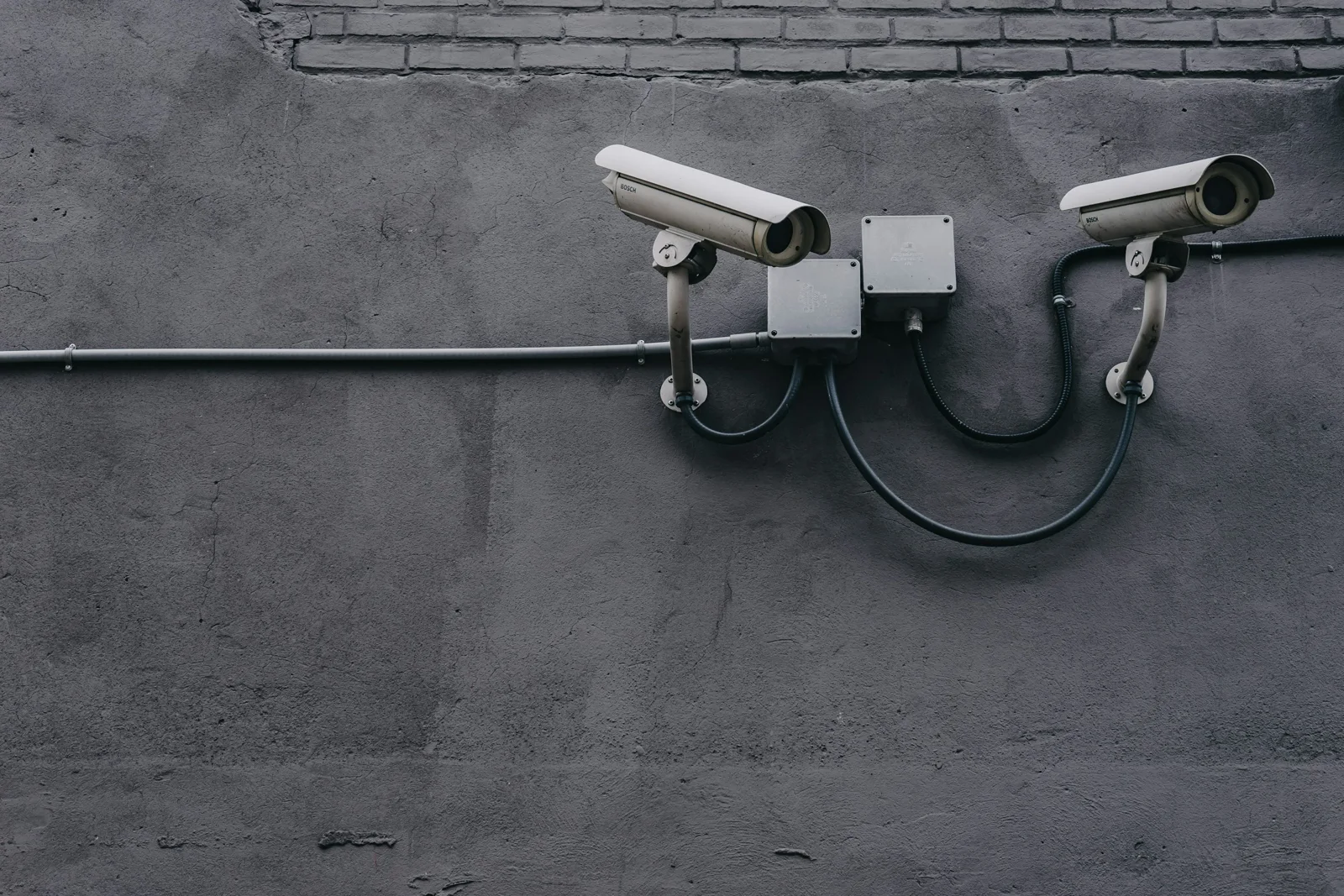
Camera + site + time
Find the moment
that matters.
Bring footage and its operational context to the same review.
Follow the workflow ↗Vision is designed to tie each camera event to a time, a place and the record it concerns, such as the delivery due at the weighbridge or the tank and its last inspection. A person reviews each match, an uncertain match stays open, and only an authorised person assigns follow-up work.
Vision, in context
A camera records a moment. The site, delivery and equipment records help a reviewer understand it.
Camera + site + time
Bring footage and its operational context to the same review.
Follow the workflow ↗
Asset + event + work order
Review what happened, which equipment it concerns and who needs to follow up.
Explore maintenance ↗Workflow examples. Photographs show industrial context; they are not customer installations.
Workflow
From camera event to reviewed delivery in four steps, each with a person responsible for it.
A constructed walkthrough of how Ancilor is designed to work. The films on this page are licensed stock footage; tracking and record labels are illustrated for this website.
A loaded truck drives onto the weighbridge. Vision opens a camera event with the site, the camera, the time and a short clip.
Vision is designed to check the deliveries that Ancilor Logistics expects at this weighbridge around this time and to propose the one that fits: DN-0417. If two fit, or none, the match stays open.
The weight is recorded against the delivery and the truck moves on to unload. The clip stays with the delivery to support the review. It is not a measurement of the load or proof of receipt.
The receiving supervisor reviews the delivery with its clip. A load lighter than its delivery note, or a damaged cover, becomes a follow-up that the supervisor assigns to a named owner.
What Vision does
The weighbridge is one example. On any site, Vision is designed to tie each camera event to a time, a place and a record, and a person decides what follows from it.
Read the article on camera eventsEach event records the site, the camera, the area in view and the time, with a short clip. Camera clocks are checked before a view is used, so event times can be compared with the paperwork, and an arrival and a departure give the time a vehicle spent on site.
Each camera view has a written definition of what it records: a vehicle entering or leaving a gate, a weighbridge or a bay, a bay in use, a queue at the gate, activity in a closed area after hours. Each area has a stated purpose and a person who reviews what happens there.
Each event is designed to be placed beside what was expected at that place and time: a delivery note, an inspection, an open repair, the work scheduled there. The source of each record stays visible, so a conflict is checked rather than overwritten.
Vision is designed to propose a match only when one record fits. When two fit, or none, the event stays open for a person to resolve, and nothing is attached to a record on a guess.
A person confirms a match, corrects it or dismisses the event. Confirmed events are designed to join the delivery or equipment they belong to. Follow-up work is assigned only by someone whose role allows it, and it goes to a named owner. Each review is logged with who made it and when.
Other settings
The same steps, from event to record to review, on four other kinds of site.
A storage tank in view, with its last inspection and any open repair beside it.
A tower crane and the build area, placed beside the site’s open inspection findings and repairs.
A truck at the receiving door, placed beside the delivery Ancilor Logistics expects, for the receiving supervisor to confirm or correct.
Bin shelves and pallets in a stockroom. A camera event there can be placed beside the replenishment list and the shift report, for the person on shift to check.
Requirements and deployment
Cameras, processing and quality are agreed for each site, in writing, before anyone relies on an event.
Fixed cameras with a clear view of the gate, deck or bay, access to their video streams or recorder, accurate time on every camera, and a network that can carry the streams to where they are processed. Each view is checked by day and by night for glare, obstructions and weather. Existing cameras are used where their view and image allow it.
Where video is processed, how long clips and events are kept, who may watch them and what is masked are agreed for each site before it starts. Access to video can be narrower than access to the records it is linked to, and the setup is checked against the rules that apply to the site.
Each event is defined in writing before it is used, for example what counts as a truck on the deck. Results from the site’s own cameras are then compared with a person’s review of the same footage. Missed events, false alerts and uncertain matches are examined separately, and acceptance criteria are set for each camera view and the decision it supports.
With one site, one camera view and the workflow behind it, such as arrivals at a weighbridge. We look at the cameras and the records first; scope and timing follow from that.
Research
Technical reports by Argjend Bajraktari, published on Zenodo under CC BY 4.0. They propose architectures; they are not peer reviewed and report no product performance.
All researchHow AI stays tied to its sources, its permissions and the actions it may propose.
Read the report on ZenodoHow a decision keeps its sources, its context and the reasons behind it.
Read the report on ZenodoTell us which camera view matters, the records behind it and the decision your team has to make.
Harrimont L.L.C.
Fushë-Kosovë, Kosovo · Working internationally
Visionby Harrimont